
Introduction
2026 Local Government Elections:
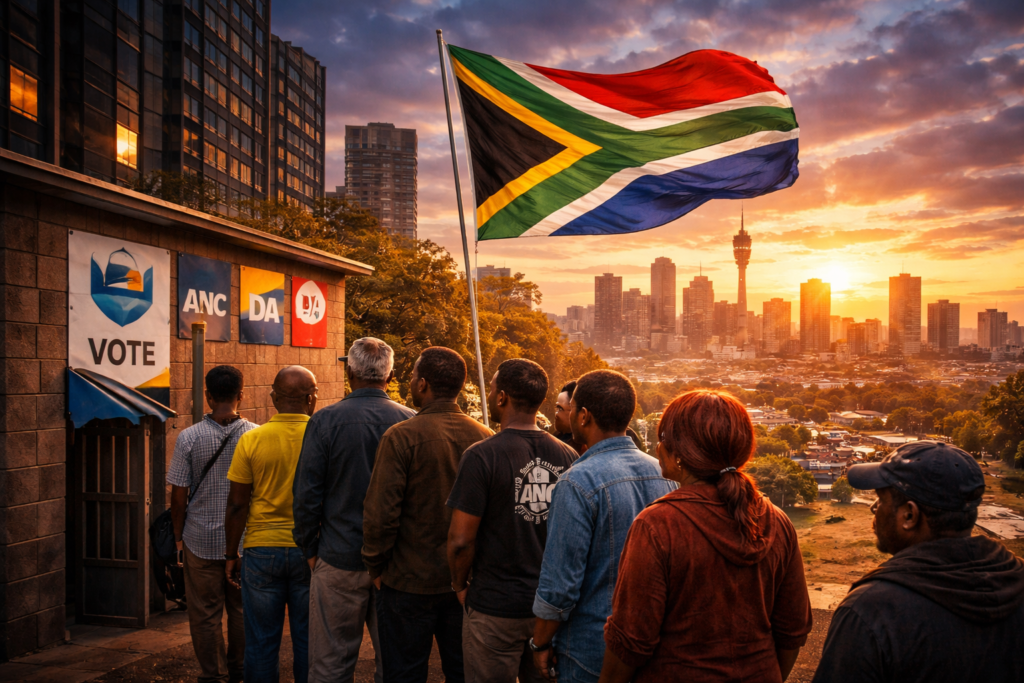
South Africa is gearing up for one of the most important political events of the year — the 2026 Local Government Elections. Scheduled to take place between 2 November 2026 and 30 January 2027, these municipal polls will decide who runs the country’s cities, towns, and districts for the next five years.
With a record 508 political parties already registered and coalition governments likely to dominate most metros, the stakes have never been higher. Service delivery, water crises, electricity reliability, and local economic recovery are all on the ballot.
Here’s everything you need to know about the upcoming 2026 local government elections and how you can turn your predictions into real opportunities on Polymarket.co.za.
When Will the 2026 Local Elections Happen?
The current municipal councils, elected on 1 November 2021, officially reach the end of their five-year term on 2 November 2026. According to the Electoral Commission of South Africa (IEC), voting must take place no later than 90 days after that date. This means the 2026 Local Government Elections are firmly scheduled within a window running from early November 2026 to the end of January 2027.
While the precise voting day has not yet been gazetted, political analysts and the IEC expect the election to be held sometime between mid-November and mid-December 2026, avoiding the peak holiday period in late December and early January. The final date will be formally announced by the Minister of Cooperative Governance and Traditional Affairs in consultation with the IEC, most likely in the second half of 2026.
A crucial milestone already locked in is the national voter registration weekend on 20–21 June 2026. This will be the last major opportunity for millions of eligible South Africans — especially first-time voters and those who have moved provinces — to register, update their details, or correct any errors on the voters’ roll. The IEC has emphasised that voters must ensure their details are correct well in advance, as no new registrations will be allowed in the final weeks before polling day.
In previous local elections, late registration drives often led to long queues and frustration. Experts are urging citizens in Gauteng, KwaZulu-Natal, and the Western Cape — where voter turnout and metro control will be fiercely contested — to treat the June weekend as a priority. With over 26 million registered voters expected by election day, every valid ID and updated address could make a meaningful difference in tight races and potential coalition negotiations.
Staying informed about these key deadlines is essential for anyone planning to participate — or trade — on the outcome of South Africa’s 2026 local government elections.
Why These Elections Matter More Than Ever
After the 2024 national elections produced the Government of National Unity (GNU), local government remains the biggest test of coalition politics in practice. Many metros and municipalities are already run through fragile alliances, and poor service delivery continues to frustrate voters in Gauteng, KwaZulu-Natal, and the Western Cape. Unlike national politics, municipalities directly control the services that affect daily life — from collecting rubbish and fixing potholes to supplying clean water and keeping the lights on.
Key issues expected to dominate the campaign:
- Fixing crumbling infrastructure and unreliable water & electricity supply
- Tackling unemployment and local economic stagnation
- Improving safety and cleaning up corruption in municipal procurement
- Stabilising coalition governments that have led to frequent collapses and by-elections
President Ramaphosa has publicly urged the ANC to improve its dismal record on local service delivery, describing 2026 as the year of “decisive action” to fix municipalities or face voters’ wrath. Opposition parties, including the DA and ActionSA, are positioning themselves as credible alternatives for clean governance and better management of metros like Johannesburg and Tshwane.
Analysts predict further declines for the ANC in major urban areas, with hung councils and complex coalition negotiations almost guaranteed in places like Johannesburg, Tshwane, and eThekwini. The outcome of these elections could reshape grassroots politics, influence the stability of the national GNU, and determine whether service delivery finally improves — or continues to spiral.
How to Trade the 2026 Local Government Elections on Polymarket.co.za
Prediction markets are the smartest way for informed South Africans to back their political analysis with real stakes.
On Polymarket.co.za — South Africa’s dedicated, ZAR-friendly prediction market platform — you can already find active contracts on local politics, including:
- Will the ANC retain control of any major metro after 2026?
- Which party will win the most seats in Johannesburg / Cape Town / Durban?
- Will the GNU-style coalitions survive or collapse in key municipalities?
- Voter turnout predictions for the 2026 local elections
These South Africa election betting markets let you trade yes/no contracts in real time using local payments.
Whether you follow politics closely in Gauteng, the Western Cape, or KwaZulu-Natal, your on-the-ground knowledge gives you an edge that global platforms can’t match.
Ready to turn your prediction on the 2026 municipal elections into potential profit?
Polymarket SA Editorial Team